Table of Contents
1. Introduction
Fatigue. Brain fog. Night sweats. Weight gain. Mood swings. Insomnia.
If you’re reading this, chances are you know the list all too well.
For many women, perimenopause feels like someone flipped a switch on their body overnight. What used to work for managing weight, sleep, and energy suddenly doesn’t. I know this personally, because I’ve been living it too.
When my symptoms first started I was told by my doctor to “just wait it out.” But the truth is, perimenopause doesn’t wait with you, it ramps up. That experience led me down a path of research, late-night Google searches, and eventually trying hormone replacement therapy (HRT) for myself.
This guide is here to help you understand what HRT is, why doctors hesitate to prescribe it, what the latest research really says, and how to explore both online and local options safely. My goal is not to convince you that HRT is right for everyone, but to give you the knowledge and tools to make an informed choice, and to remind you that you don’t have to suffer in silence.
2. What is Perimenopause & Why Symptoms Happen
Perimenopause is the natural transition leading up to menopause, and it can start earlier than many women expect, sometimes in the late 30s, more commonly in the 40s (mine started around 55 but suddenly hit after my 56th birthday). It usually lasts several years before your period stops completely.
During this time, your hormones don’t simply “decline in a straight line.” They fluctuate. Estrogen, progesterone, and even testosterone can rise and fall unpredictably. One month you might feel almost like your old self, the next you’re hit with fatigue, hot flashes, and mood swings.
These shifts affect more than just your period. Hormones influence almost every system in the body:
- Metabolism and weight: Lower estrogen and progesterone slow metabolism and change how your body stores fat. Many women notice more weight around the belly, even if their eating and exercise haven’t changed.
- Sleep and energy: Estrogen supports serotonin and other brain chemicals tied to sleep. As levels drop, falling asleep or staying asleep becomes harder.
- Mood and brain fog: Hormonal changes can affect neurotransmitters, leaving you feeling foggy, irritable, or more anxious than usual.
- Joints and muscles: Fluctuating estrogen is linked to joint pain and stiffness, another frustrating but common symptom.

It’s easy to feel like your body is working against you, but what’s really happening is that your hormones are changing the rules of the game. That’s why strategies that worked in your 20s or 30s, like cutting calories or doing more cardio, suddenly don’t have the same effect.
So, the good news is understanding what’s happening in your body helps you take back some control. Lifestyle changes, natural support, and when appropriate, hormone therapy, can make a big difference in how you feel during this season.
3. Why Women Struggle to Get Help
If you’ve ever left a doctor’s office feeling brushed off with a “this is just part of getting older,” you’re not alone. Many women struggle to get support during perimenopause and menopause. Here’s why:
Outdated Research Still Lingers
Back in the early 2000s, the Women’s Health Initiative (WHI) study linked HRT to increased breast cancer and heart disease risk. Those headlines spread fast and scared doctors and patients alike. What often gets overlooked is that the study focused on women much older than the average woman starting HRT today.
Newer research paints a more balanced picture, showing that starting hormone therapy earlier, in your 40s or 50s often carries fewer risks and more benefits. But the shadow of those old studies still influences medical decisions.
Doctors Receive Little Menopause Training
This part surprised me when I first learned it: menopause is not considered a medical specialty. That means most doctors receive very little formal training on how to treat it. So when you ask about HRT, many doctors hesitate simply because they don’t feel confident managing it. My doctor at Kaiser told me, “we don’t prescribe that here.”
The “Tough It Out” Mentality
For decades, women were told to grit their teeth and live with the hot flashes, mood swings, and sleep problems. That mindset hasn’t fully disappeared. Even today, many women are told, “it’s normal, you’ll get through it.” While technically true, that doesn’t make the experience any less disruptive or exhausting.
The result? Countless women are left searching for answers on their own, bouncing between doctors, blogs, and online forums. That’s why having updated, trustworthy information matters so much.
4. A Faith-Based Perspective
When you’re in the middle of fatigue, mood swings, or sleepless nights, it can feel overwhelming. I’ve had those nights where I whispered, “God, help ~ I can’t sleep.”

One thing I’ve learned is that these changes don’t surprise Him. He designed our bodies, and He knew we’d walk through this season. Psalm 139 reminds us that we are “fearfully and wonderfully made”, even when our bodies feel unpredictable.
For me, faith doesn’t mean pretending symptoms don’t exist. It means I can bring them honestly to God and ask for wisdom. Sometimes that wisdom shows up in the form of natural supplements, lifestyle changes, or even medical treatments like HRT. Other times, it looks like patience, grace with myself, or leaning into prayer when I’m restless at night.
If you’re reading this and feeling unseen, remember: you’re not forgotten. God’s care for you doesn’t fade as your hormones shift. He’s with you in the sleepless nights, the brain fog, and the hot flashes. And He will guide you as you seek the right support for your health.
5. What is HRT?
Hormone Replacement Therapy, or HRT, is the use of medications that contain female hormones to replace the ones your body is no longer making in the same amounts during perimenopause and menopause. The goal is to ease symptoms like hot flashes, sleep problems, mood changes, and bone loss, while also improving overall quality of life.
FDA-Approved vs. Compounded “Bioidentical” Hormones
This is where a lot of confusion comes in.
- FDA-approved HRT: Includes estradiol patches, gels, pills, vaginal rings, and micronized progesterone capsules. These are regulated, tested for safety and effectiveness, and widely used in mainstream medicine.
- Custom-compounded bioidentical hormones (cBHRT): These are mixed by compounding pharmacies to create personalized doses. While they sound appealing, they are not FDA-approved, meaning the doses may not be consistent and safety data is limited.
Unless there’s a medical reason otherwise, most experts recommend starting with FDA-approved options, since they’re backed by strong evidence.
Delivery Methods
One of the benefits of modern HRT is the variety of delivery methods:
- Patches or gels: Applied to the skin. These often carry a lower risk of blood clots compared to oral estrogen.
- Pills: Taken by mouth. Still commonly used, but some women prefer patches for safety reasons.
- Vaginal rings, creams, or tablets: Used mainly for symptoms like dryness or painful intercourse.
- Progesterone capsules: Often prescribed alongside estrogen if you still have your uterus, since progesterone helps protect against endometrial cancer.
Benefits of HRT
Research continues to show that HRT can do much more than just ease hot flashes. Benefits may include:
- Better sleep: Many women notice deeper, more restful sleep.
- Mood and brain health: Some studies suggest improved mood and reduced brain fog.
- Bone strength: Estrogen helps protect against bone loss and osteoporosis.
- Weight and metabolism: While not a magic bullet, balanced hormones can make it easier to maintain a healthy weight.
- Quality of life: Fewer night sweats, more energy, and a sense of getting “yourself back.”
Risks of HRT
It’s important to acknowledge risks too, even if newer studies show they’re often smaller than once feared. Potential risks include:
- Breast cancer: The risk varies depending on the type of hormone therapy, length of use, and age.
- Blood clots: More common with oral estrogen than with transdermal (patch or gel).
- Stroke or heart disease: Again, risks are influenced by age, health status, and timing of therapy.
Doctors usually weigh these factors against your symptoms and health history before prescribing. For many women starting HRT before age 60 or within 10 years of menopause, the benefits often outweigh the risks.
6. BHRT vs. HRT: What’s the Difference?
You’ve probably seen both terms floating around, HRT and BHRT, and it’s no wonder many women are left scratching their heads. Let’s clear it up.
HRT (Hormone Replacement Therapy)
- An umbrella term for all types of hormone therapy.
- Includes both synthetic hormones and bioidentical hormones.
- Can be delivered as pills, patches, gels, or vaginal treatments.
BHRT (Bioidentical Hormone Replacement Therapy)
- Refers to hormones that are chemically identical to the ones your body produces.
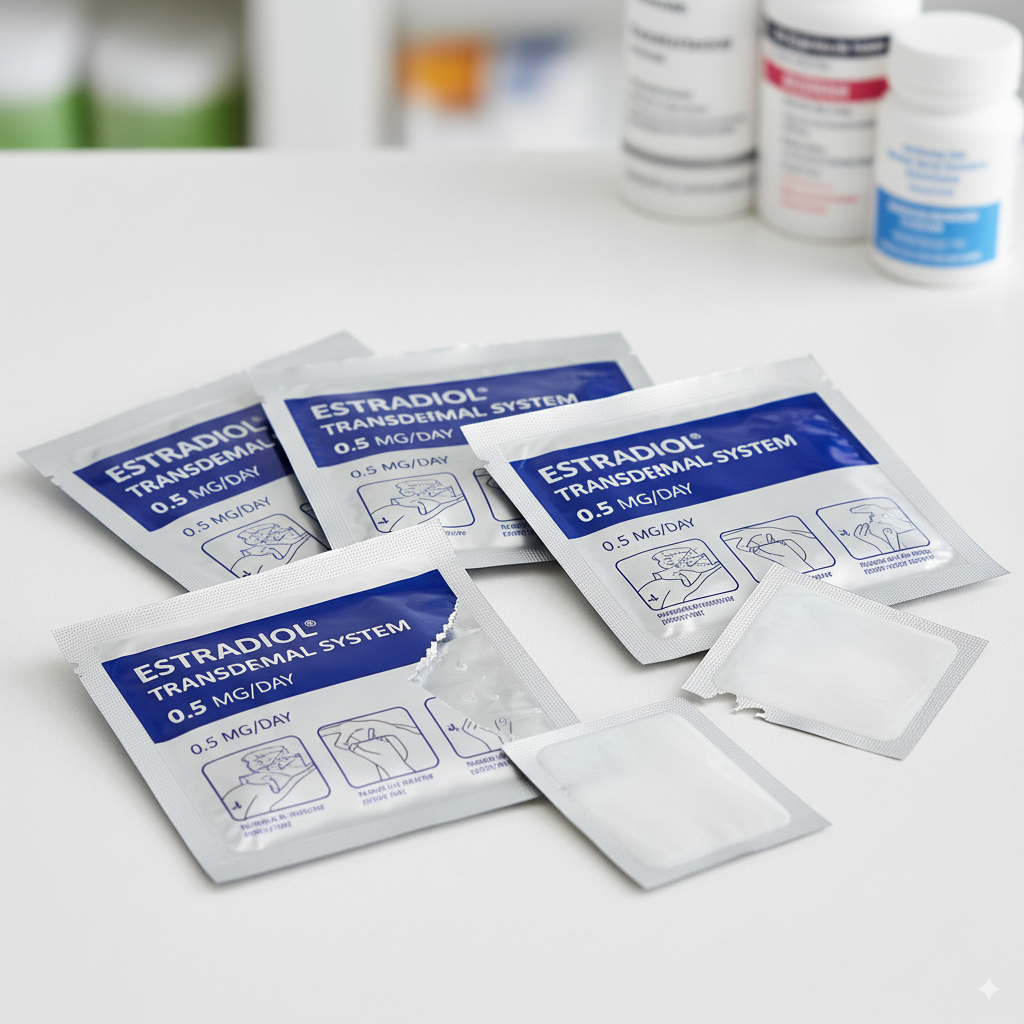
- FDA-approved options include estradiol patches, gels, and micronized progesterone capsules.
- Also includes custom-compounded bioidentical hormones (cBHRT) made at compounding pharmacies, which are not FDA-approved.
The Confusion
Many women hear “BHRT” and think it automatically means “natural and safe.” That’s not always true. While FDA-approved bioidentical hormones are well-studied, custom-compounded BHRT isn’t regulated in the same way. This means dosages can vary, and safety data is limited.
What Experts Recommend
Most menopause specialists suggest starting with FDA-approved BHRT, like estradiol patches and micronized progesterone , since these are proven, regulated, and widely available. Compounded BHRT may be appropriate in certain cases (such as allergies to fillers in FDA-approved meds), but it shouldn’t be the first-line choice for most women.
Bottom Line
- HRT = the broad category.
- BHRT = a type of HRT that uses bioidentical hormones.
- FDA-approved BHRT is generally considered safe and effective.
- Custom-compounded BHRT is less studied and should be approached with caution.
7. Online HRT Services
One of the biggest changes in women’s health over the last few years has been the rise of telehealth. If you’ve ever felt dismissed in a doctor’s office or waited months for an appointment, the idea of getting care online can feel like a lifeline.
These platforms connect you with licensed providers who review your health history, symptoms, and sometimes lab results before prescribing. They typically offer FDA-approved bioidentical hormones such as estradiol patches, progesterone capsules, or DHEA.
Here’s a closer look at some of the most popular options:
Winona
This was my personal choice when I decided to try online HRT. (Read my review on Winona here) What I appreciated most was being able to chat with someone before paying. I filled out a detailed questionnaire, listed all my symptoms, and within a day I had a plan for patches, progesterone, and DHEA. The process felt quick but not careless, and I liked the ongoing access to their support team.
Pros: Easy to get started, tailored recommendations, responsive customer service.
Cons: Doesn’t accept insurance, so it’s all out of pocket.
Midi Health
Midi focuses exclusively on midlife women’s health. They accept many insurance plans, which can make care more affordable. Their providers tend to offer a more comprehensive approach, sometimes combining HRT with lifestyle coaching.
Pros: Accepts insurance, specialized in women over 40, strong reputation.
Cons: Wait times can be longer than other platforms.
Evernow
Evernow offers HRT along with lifestyle and symptom management tools. Their platform is sleek and user-friendly, and they often highlight research-backed care.

Pros: Good educational resources, broad treatment options.
Cons: Subscription pricing may not fit everyone’s budget.
Alloy
Alloy works through a quick intake form and matches you with treatment options. They’re known for simplicity, choose a plan and get started.
Pros: Fast setup, straightforward process.
Cons: Less personalized than some competitors.
Telyrx
Telyrx is a pharmacy that also connects you with a doctor who can prescribe HRT. It feels more traditional but still offers the convenience of online ordering.
Pros: Pharmacy + prescriber model, clear medication pricing.
Cons: Website isn’t as user-friendly as newer telehealth platforms.
Are Online Services Legit?
It’s normal to wonder if these companies are safe. Based on my research and experience, here’s what you should know:
- Licensed providers review your case before prescribing.
- Medications are FDA-approved and come from real pharmacies.
- Telehealth is regulated, it’s not a loophole, it’s just a modern way to access care.
That said, not all services are created equal. Always read reviews, check the provider’s credentials, and make sure the medications are coming from a licensed pharmacy.
8. How to Find a Local Doctor
Online platforms are convenient, but some women prefer in-person care. If you’d rather see someone face-to-face, here are some ways to find the right doctor:
Use The Menopause Society Directory
The Menopause Society (formerly NAMS) has a searchable directory of certified practitioners. These providers have additional training in midlife and menopause care, which makes them more likely to understand your symptoms and treatment options.
Search Smartly
Instead of typing just “doctor near me,” try more specific searches like:
- “Menopause specialist near me”
- “Bioidentical hormone therapy doctor near me”
- “HRT clinic [your city]”
Adding your city or region helps filter out general results and bring up practitioners in your area.
Look for Reputable Affiliations
Doctors connected with trusted institutions like Stanford, Mayo Clinic, UCSF, or Cleveland Clinic often have more resources and updated training. Even community doctors who are part of larger networks may have continuing education opportunities that keep them current.

What to Ask in Your First Appointment
- Do you prescribe FDA-approved HRT (estradiol, micronized progesterone)?
- How do you monitor treatment (bloodwork, symptom tracking, follow-ups)?
- What’s your approach to balancing risks and benefits?
- Are you familiar with both lifestyle and medical options for perimenopause?
The right doctor won’t dismiss your symptoms or push you into a treatment you’re not comfortable with. They should listen, explain options, and respect your goals.
9. Why Early HRT May Be Safer
One of the biggest shifts in how doctors view HRT today comes down to timing. For years, women were warned about the risks of hormone therapy based on older studies. But newer research shows that when you start HRT matters.
The “Timing Hypothesis”
Studies suggest that beginning HRT before age 60 or within 10 years of menopause may actually carry fewer risks and more benefits. This is sometimes called the “timing hypothesis.”
Here’s why:
- Younger women are generally healthier. Their arteries and cardiovascular systems aren’t as affected by age, so adding hormones doesn’t stress them in the same way.
- Hormones can protect bones and brain health earlier. Starting sooner helps preserve bone density and may have cognitive benefits.
- Risks increase with age. Women who start HRT for the first time in their 70s may face higher risks of stroke, clots, or heart disease than those who begin earlier.
Transdermal vs. Oral Estrogen
The way hormones are delivered matters too.
- Transdermal estrogen (patches or gels) enters the bloodstream through the skin, bypassing the liver. This may lower the risk of blood clots compared to oral estrogen.
- Oral estrogen is still widely used, but some women and doctors prefer patches because of this reduced clotting risk.
Potential Benefits of Starting Earlier
- Improved sleep and mood
- Reduced hot flashes and night sweats
- Stronger bones and lower fracture risk
- Possible heart and brain health support
Of course, HRT isn’t for everyone. But the idea that “all hormones are bad” has shifted. For many women in their 40s and 50s, the benefits may outweigh the risks, especially when treatment is started at the right time and monitored by a qualified provider.
10. Real-Life Stories & Testimonials
Facts and research are important, but sometimes what helps the most is hearing from women who’ve been there. Every journey with perimenopause and HRT looks different, but you’ll probably see yourself in at least one of these stories.
Christine’s Story (Me)
When my symptoms first started, my doctor told me to “wait it out.” That didn’t sit well with me, especially when I could barely sleep and felt like my energy was draining away. After weeks of research, I tried an online HRT service. Within a week of starting progesterone and estrogen patches, I noticed I was sleeping better and waking up with more energy. It wasn’t an instant cure, but it felt like I got part of my life back.
A Friend’s Experience
A close friend of mine struggled with hot flashes so intense she had to change her clothes multiple times a day. She hesitated for years because she’d heard hormone therapy was “too risky.” After finally starting a low-dose patch and oral progesterone, her symptoms eased within two months. Her only regret? Not starting sooner.
Reader Voices
This is where I’d love to hear from you. Have you tried HRT? Are you considering it but feeling unsure? Share your experience in the comments. Your story could encourage another woman who’s in the middle of the same struggle.

11. Conclusion: Moving Forward with Confidence
Perimenopause and menopause can feel like uncharted territory. The hot flashes, brain fog, weight gain, and sleepless nights often show up just when life feels busy enough already. It’s no wonder so many of us feel dismissed or overwhelmed when we try to get help.
The good news is that you don’t have to navigate this season alone or “tough it out” the way generations before us were told to do. Hormone therapy today looks very different from the treatments of the past. With FDA-approved options, telehealth platforms, and a growing network of menopause specialists, there are more ways than ever to find support that fits your needs.
HRT isn’t for everyone, but it is worth understanding so you can make an informed choice. Whether you decide to pursue hormone therapy, try natural approaches, or combine both, the important thing is this: your quality of life matters.
As you consider your next steps, remember you’re not sick, broken or forgotten. Your body is shifting into a new stage, and with the right tools, wisdom, and support, you can thrive here too.
If you’re feeling lost, start simple: track your symptoms, pray for wisdom, and reach out to a provider you trust. And know that you’re not alone; thousands of women are walking this same road and finding their way forward.
You deserve energy, rest, and peace in this season. Take the next step, however small, toward caring for yourself. Because the best chapters of your life don’t end here they can begin here.
Many Blessings,
Christine